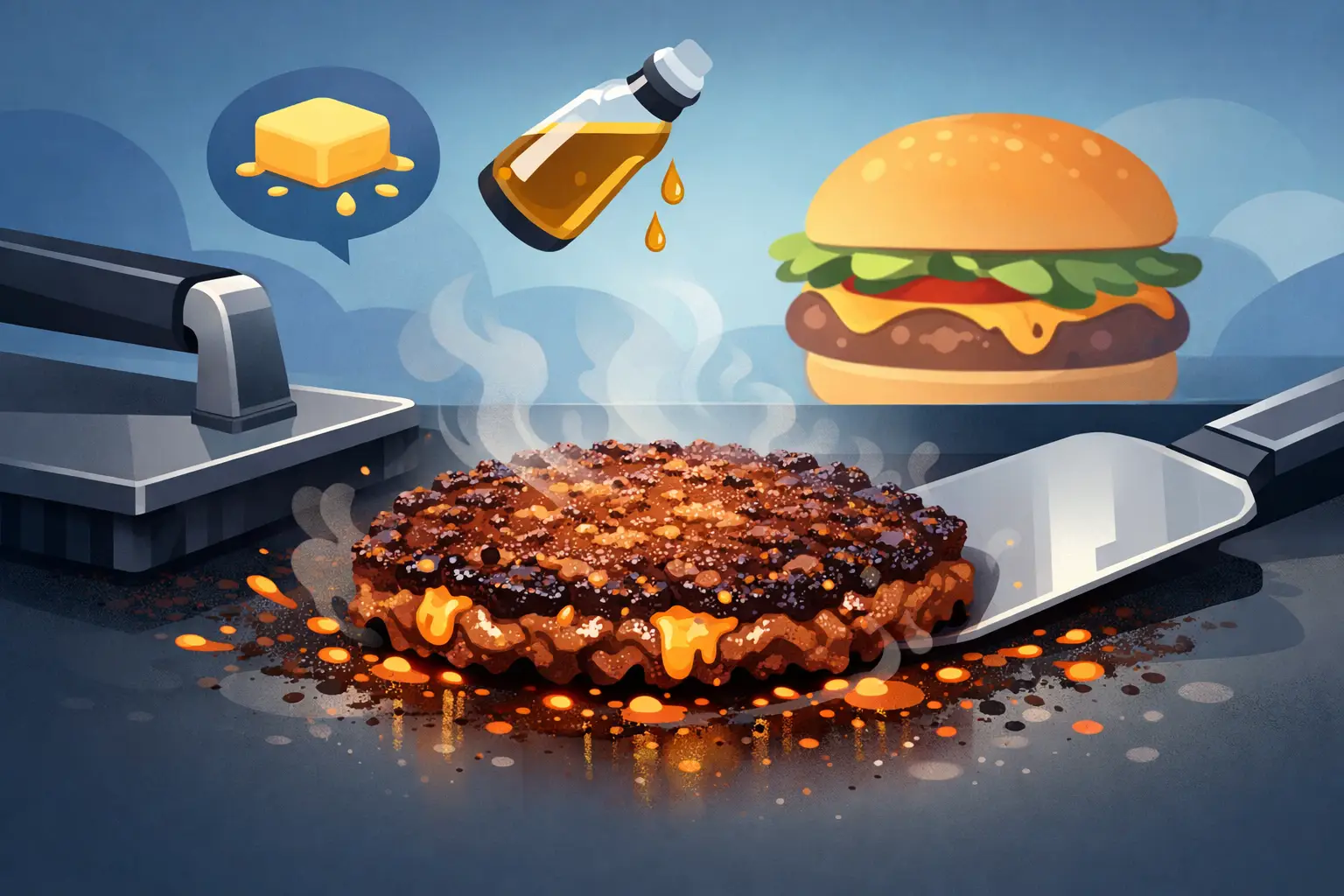
That first bite tells you straight away when a smash burger has nailed it. You get the juicy centre, sure, but the real magic is that dark, crackly edge – the bit that almost shatters before the beefiness kicks in. If you’ve ever wondered what makes smash burgers crispy, it’s not one trick. It’s a perfect little collision of heat, fat, pressure and timing.
That crispy crust is the reason smash burgers have such a cult following. They’re not trying to be thick pub burgers stacked to the ceiling. They’re built for maximum flavour in a short, sizzling moment on a hot plate. Done properly, they’re rich, salty, caramelised and outrageously moreish.
What makes smash burgers crispy in the first place?
The short answer is direct contact with very high heat. When a ball of beef hits a ripping hot grill or flat top and gets pressed down hard, more of the meat touches the cooking surface. More contact means more browning, and more browning means more of that crispy, deeply savoury crust.
This is where the Maillard reaction earns its keep. That’s the cooking reaction that happens when proteins and sugars in the meat meet serious heat. Instead of tasting simply like cooked mince, the burger develops those darker, toastier, almost lacy flavours that make smash burgers feel so indulgent.
The crispy part is really the surface drying and browning fast while the inside stays tender. So the goal isn’t to cook the whole patty until it’s dry. It’s to create a thin layer of intense caramelisation on the outside before the interior loses its juiciness.
Heat does the heavy lifting
If the surface isn’t hot enough, the meat steams instead of sears. That’s the fastest way to miss out on crispiness. You’ll still get a burger, of course, but not that irresistible crust that gives smash burgers their signature bite.
A proper smash burger needs a cooking surface that is seriously hot before the beef goes on. Cast iron, steel flat tops and diner grills are ideal because they hold heat well and recover quickly between patties. Thin, flimsy pans can struggle once the cold meat lands, which means less browning and more moisture hanging around where it shouldn’t.
That’s also why overcrowding is a problem. Too many patties on at once can drag the heat down and create steam. Smash burgers are a fast game, but they still need space to do their thing.
Pressure matters, but only at the start
The smash itself is not just for theatre. Pressing the beef firmly in the first few seconds spreads it thin and creates maximum contact with the hot surface. That bigger contact area is where the crust forms.
There’s a sweet spot, though. Smash too gently and the patty stays thick, limiting browning. Smash too late and you squeeze out juices after the crust has started forming. The best result comes from pressing once, early, and then letting the burger cook undisturbed.
This is where smash burgers are different from the old myth about pressing burgers to keep them flat while they cook. Constant pressing is a one-way ticket to dry meat. A smash burger gets its pressure right at the start, then it’s left alone to caramelise.
Fat content is a big part of the deliciousness
Lean beef sounds sensible, but for smash burgers it can be a bit of a let-down. A decent fat ratio helps in two ways. First, it adds flavour. Second, as the fat renders, it helps the edges fry against the hot surface and build that lacy, crispy texture.
That doesn’t mean more fat always equals better. Too much can leave the patty greasy and cause flare-ups or excess pooling on some cooking surfaces. But beef with enough marbling to stay juicy while still browning well is a big part of why smash burgers taste so rich and satisfying.
It also explains why the crispy bits often show up most dramatically around the edges. Those thinner, fattier fringes cook the fastest and develop the deepest crunch.
The meat needs to stay loose
A tightly packed burger patty works against crispiness. If the mince is compressed too much before it hits the grill, it can cook up dense and a bit rubbery. Looser meat gives you better texture and allows the patty to spread naturally when smashed.
That spread matters because irregular edges crisp up beautifully. Those craggy little bits that stick out beyond the main patty are often the most flavour-packed part of the whole burger. They catch the heat, brown faster and deliver that addictive contrast between crisp outside and juicy middle.
So while neatness has its place, smash burgers are better when they’re slightly rough around the edges. Literally.
Timing is everything
Crispiness has a narrow window. Pull the patty too early and the crust hasn’t fully developed. Leave it too long and you trade crackle for dryness. That balance is part of what makes a great smash burger feel simple to eat but tricky to perfect.
Once the patty is smashed, it usually cooks quickly. You want enough time on the first side for deep browning to happen before flipping. If you flip too soon because you’re worried it’s sticking, you can tear the crust away before it’s ready. In many cases, sticking is actually a good sign at first – it means the meat is still forming its sear.
When the crust is properly developed, it releases more easily. Then you flip, add cheese if that’s the plan, and finish the second side fast. The aim is always the same: crust outside, juicy inside.
What makes smash burgers crispy without turning them dry?
This is the real trick. Crispiness is not about cooking the life out of the burger. It’s about creating contrast. The patty is thin enough to brown fast, but the high heat and quick cook stop the centre from drying out too much.
That balance also depends on size. A smash burger patty is usually smaller and thinner than a traditional burger, which means every second counts. With a thick burger, you can build a crust and still have a pink centre because there’s more volume. With a smash burger, precision matters more.
Cheese can play a role too. Melted cheese softens some of the top surface while the bottom crust stays crisp, which creates that classic diner-style texture. Add pickles, onions and sauce, and you get crunch, richness and acidity all working together. The crust is still the hero, but it tastes even better with a bit of contrast around it.
The bun and toppings can ruin it if they’re wrong
A crispy patty won’t stay crispy for long if it gets buried under watery toppings or dropped into a cold, soggy bun. Smash burgers are quick-food perfection, but they’re also a little fragile. The crust is at its best fresh off the grill.
That’s why soft but lightly toasted buns work so well. They give enough structure without fighting the patty. Toppings should complement the burger, not drown it. A few pickles, diced onion, mustard, sauce and cheese can be sensational. Pile on too much wet salad and you start losing that crusty payoff.
This is one of those cases where less can be more. Smash burgers shine when every element knows its role.
Why diners do smash burgers so well
There’s a reason smash burgers feel right at home in a proper diner setting. Flat top grills are made for this style of cooking. They hold steady heat, produce that gorgeous sear, and let patties cook fast enough to keep the texture spot on.
More than that, smash burgers suit the whole diner vibe. They’re fun, fast, indulgent and made to be eaten hot with zero fuss. Add golden fries, a thick shake or a sundae on the side, and suddenly it’s not just lunch – it’s a delicious blast from the past.
At a place like Boofs, that crispy-edged burger energy fits right in with the rest of the menu. It’s comfort food with a bit of swagger.
So, what should you look for in a crispy smash burger?
You want dark brown edges, not pale grey ones. You want a thin patty with plenty of contact sear. You want that first bite to have a little crunch before the juicy centre comes through. And you want enough richness from the beef and cheese to make the whole thing feel properly scrumptious.
If it tastes flat, steamy or soft all over, the heat was likely too low or the patty too crowded. If it’s crunchy but dry, it probably stayed on too long or started with meat that was too lean. The best smash burgers sit right in that sweet spot where crispiness and juiciness keep showing off at the same time.
The beauty of smash burgers is that they’re not fussy, but they are specific. A hot grill, a quick smash, beef with enough fat, and the confidence to leave the patty alone long enough to crust up – that’s the whole game. Get those details right, and you’re rewarded with one of the most satisfying bites in diner food. Next time you hear that sizzle, listen closely. That’s crispiness getting ready to steal the show.