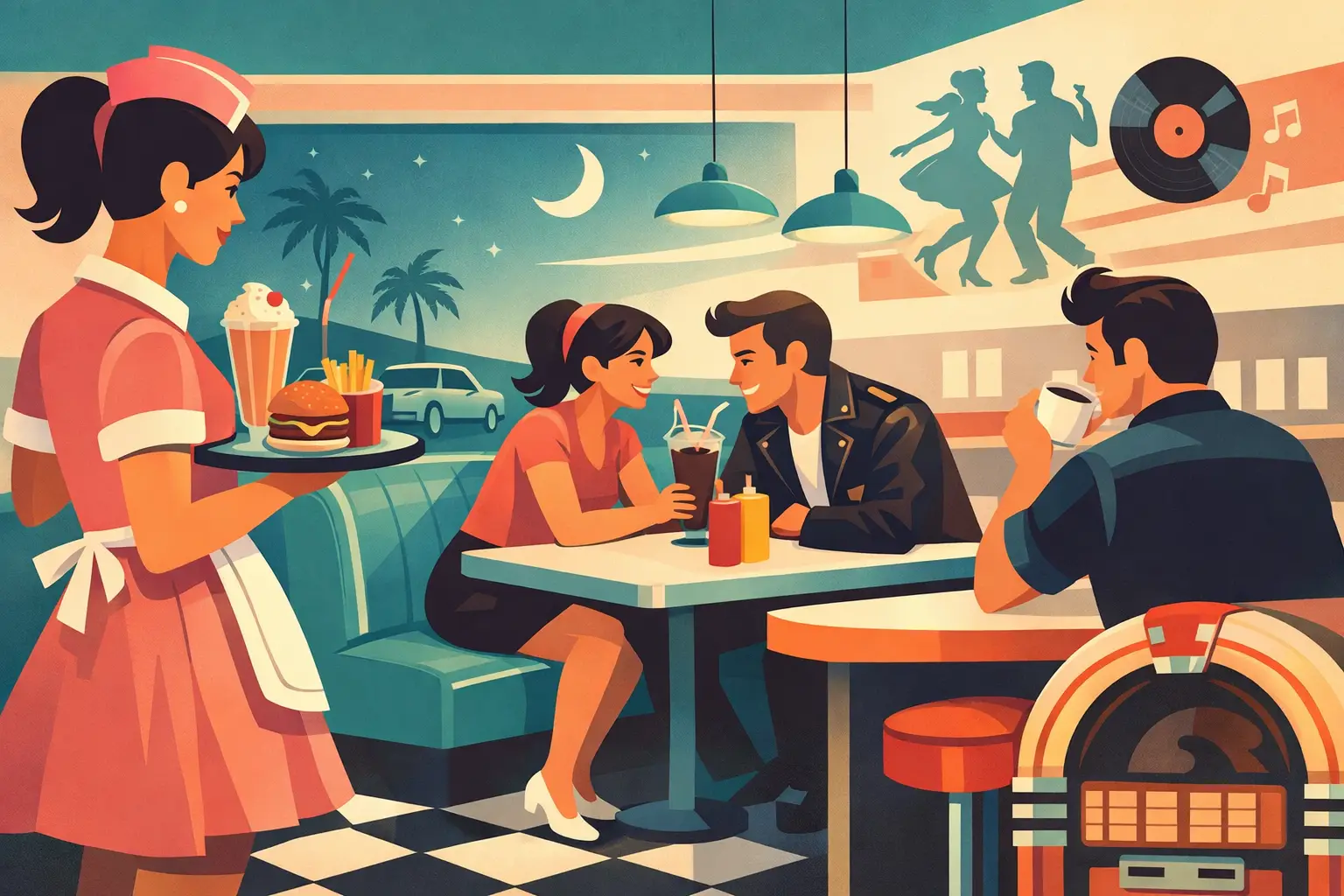
The best kind of night out usually starts the moment you walk through the door. A proper 1960s diner experience is not just about grabbing a burger and heading off – it is the bright booths, the buzz in the room, the clink of glasses, the towering shake arriving at the table, and that delicious feeling that fun is officially on the menu.
That is why people keep coming back to retro diners. They offer something many places do not even try to deliver anymore – personality. You are not there for a rushed bite between errands. You are there for the full show: comfort food, cheeky charm, sweet treats, and a setting that feels like a celebration even when it is only Wednesday.
Why the 1960s diner experience still works
There is a reason this style never really goes out of fashion. A 1960s diner experience taps into something timeless: people love food that feels familiar, indulgent and a little bit playful. Add polished chrome, pops of colour, old-school tunes and friendly service, and suddenly dinner feels like an event instead of another task.
It also works for almost every kind of outing. Families want somewhere kid-friendly that still feels exciting for the adults. Teenagers and young adults want a place with big visual energy and menu items worth showing off. Workmates want somewhere casual enough to relax but lively enough to make a team catch-up feel less like another meeting. A retro diner lands right in that sweet spot.
Nostalgia plays a big part too, even for people who never lived through the 1960s. That is the magic of it. You do not need to remember jukeboxes first-hand to enjoy the vibe. The appeal is bigger than history. It is about stepping into a place that feels joyful, generous and a little larger than life.
The look is half the fun
A true diner atmosphere should hit before the menu even opens. Booth seating, gleaming finishes, punchy signage and a playful fit-out all help set the tone. The room should feel alive. Not chaotic, not overdone, but full of energy.
That visual identity matters because diners are built around the idea that eating out should feel special without feeling formal. You can turn up for waffles and ice cream, smash burgers and fries, or a late-afternoon shake with mates, and the setting makes each one feel like a proper outing. A plain room cannot do that job. A great retro diner can.
For plenty of customers, the appeal is also social. You want a place where the table looks loaded, the desserts look outrageous in the best way, and every booth feels photo-ready. That does not mean style over substance. It means the atmosphere and the food work together. The room builds the anticipation, and the first bite has to back it up.
The food that defines a 1960s diner experience
If the look gets people in, the menu gives them a reason to stay longer and come back. At the heart of any memorable 1960s diner experience is food that is bold, comforting and completely unashamed of itself.
Think smash burgers with crisp edges and soft buns. Hot dogs loaded with flavour. Fries that are hot, golden and impossible to stop picking at. Waffles that blur the line between dessert and a very good life decision. Then come the stars of the sweet side – sundaes stacked high, thick shakes, fizzy floats and ice cream that tastes every bit as premium as it looks.
This sort of menu works because it understands the assignment. Nobody walks into a retro diner hoping for a tiny, serious plate with three leaves on it. They want scrumptious classics done properly. They want choice. They want something savoury, something sweet, and maybe one extra side they definitely did not need but absolutely ordered anyway.
There is a balance to get right, though. Nostalgia alone will not carry a menu. If the food feels gimmicky or the portions disappoint, the atmosphere loses its sparkle quickly. The best diners pair that blast-from-the-past energy with quality ingredients, generous serves and dishes that taste as good as they look.
Sweet treats are not an extra – they are part of the event
One thing that makes diner culture stand out from other casual dining formats is that dessert is never an afterthought. In many places, sweets are tacked on at the end. In a diner, they are part of the main attraction.
That changes the whole feel of the visit. Maybe the group comes in for burgers and ends up staying for sundaes. Maybe the original plan was just ice cream, but someone spots waffles heading to another table and the order suddenly gets bigger. Maybe the kids are all about floats while the grown-ups quietly decide they want one too.
That sense of indulgence is part of the charm. A retro diner gives people permission to treat themselves a bit. It is not trying to be restrained. It is trying to be delicious, memorable and fun. For a family outing, a date night, an after-school catch-up or a birthday meal, that matters more than people sometimes realise.
Why diners work so well for groups
Some venues are good for one type of occasion and awkward for everything else. Diners have a broader appeal. They suit quick lunches, casual dinners, after-work feeds, birthday celebrations and low-key group gatherings where nobody wants the pressure of a formal setting.
That is because the format is naturally flexible. The menu usually has enough range to keep picky eaters, dessert lovers and proper savoury fans happy in the same sitting. The atmosphere is upbeat without being exclusive. Kids can get excited, teens can settle in, and adults can relax without feeling like they have chosen somewhere only one age group will enjoy.
A 1960s diner experience also lends itself brilliantly to celebration. The room already feels festive, so you do not have to work hard to create the mood. Add loaded tables, big desserts and a few laughs over shared sides, and even a simple get-together starts to feel like a real occasion.
The trade-off – nostalgia has to feel fresh
There is one thing retro venues need to avoid: feeling stuck instead of timeless. A 1960s theme should feel lively and welcoming, not dusty or overly staged. The goal is not to build a museum piece. It is to create a space that borrows the best parts of diner culture and makes them work for people heading out today.
That means service matters just as much as styling. Friendly, quick, upbeat service keeps the whole experience moving. It also means the menu should honour the classics without becoming repetitive. People love a great burger and shake, but they also appreciate variety, quality and a reason to come back for something different next time.
That is where a smart diner really shines. It keeps the nostalgic backbone but delivers it with modern consistency, premium ingredients and enough menu range to suit repeat visits. If you get that mix right, the retro concept feels exciting instead of forced.
What people really want from a retro diner night out
At its core, a diner visit is about mood. People want to leave fuller, happier and slightly tempted to stay for one more scoop. They want music, colour, comfort food and a reason to put the mobiles down for at least part of the meal – even if they pick them back up to snap the shakes.
They also want value, but not only in the strict dollars-and-cents sense. Value can mean generous portions, a menu that suits the whole group, a place that feels worth the trip, or a venue that turns an ordinary catch-up into something more memorable. That is why the strongest retro diner brands do more than serve food. They create a place people want to revisit, recommend and use for all sorts of occasions.
For a spot like Boofs Ice Cream Diner, that combination makes perfect sense. Big flavours, premium ice cream, cheerful energy and a delicious blast from the past are exactly what people are chasing when they want more than a standard meal out.
The beauty of a great diner is that it does not ask you to overthink it. Show up hungry, bring your favourite people, order the burger, add the fries, say yes to the shake, and let the room do the rest. That is the real magic of it – a 1960s-inspired night out still knows how to make people feel like they came for dinner and accidentally found a good time too.