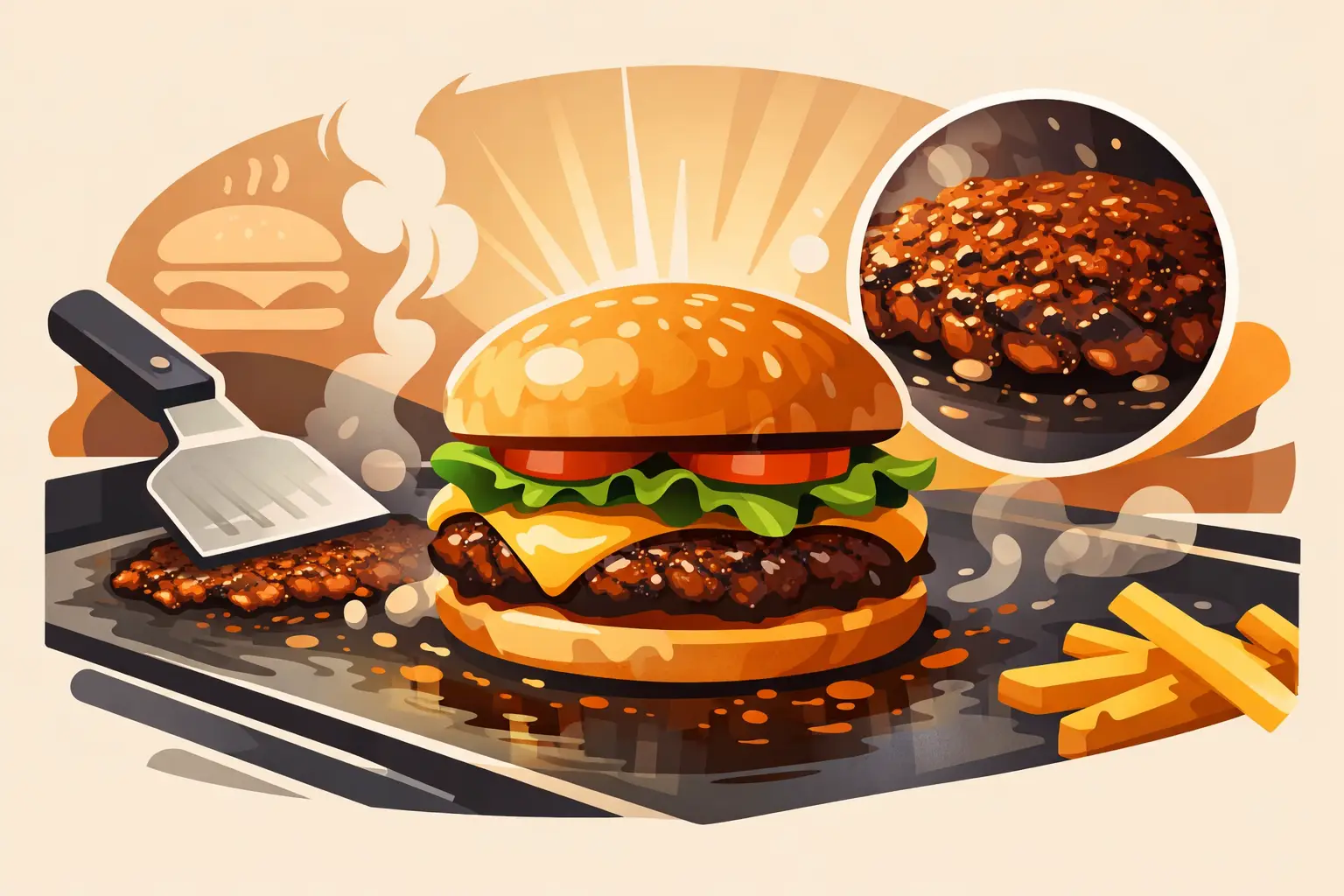
That lacy, dark-golden edge that crackles when you bite in? That is the whole point of a great smash burger crust. It is not a burnt patty, a fancy garnish or something added after cooking. It is the delicious, savoury layer made when fresh beef meets a seriously hot flat plate, gets pressed thin, and stays put long enough to develop maximum flavour.
For a proper diner burger, the crust is where the magic happens. It brings salty, beefy depth, a touch of crunch and those irresistibly crisp edges that make you reach for another bite before you have even put the first one down. Add melting cheese, a soft bun, tangy pickles and a heap of hot fries on the side, and you have got a delicious blast from the past worth getting excited about.
What is a smash burger crust?
A smash burger starts with a loose ball of minced beef rather than a pre-shaped patty. That ball lands on a hot, flat cooking surface and is pressed firmly into a thin round. The pressing creates more direct contact between the beef and the plate, which gives the meat more room to brown.
That browning is called the Maillard reaction. It is the same flavour-building process behind toasted bread, roasted coffee and the golden surface of a grilled steak. As heat works on the proteins and natural sugars in the beef, it creates hundreds of rich, roasted flavours and aromas. The result is a crust that tastes far bigger and more savoury than the patty’s modest thickness suggests.
The best crust is deeply browned, uneven around the edges and a little lacy. It should have some proper bite, but the middle of the patty should still be juicy. A smash burger is not trying to be a thick pub burger with a charred outside and pink centre. It is a different kind of treat: thin, fast, gloriously messy and built for stacking.
Why a crispy smash burger crust tastes so good
Texture is a big part of it. A soft bun, creamy sauce and melted cheese need something with a little crunch to keep every mouthful interesting. The crust delivers that contrast without turning the burger dry or fussy.
Then there is the flavour. When beef browns properly, it takes on nutty, caramelised and almost toasted notes. Salt brings those flavours forward, while the rendered beef fat carries them across the palate. That is why even a simple cheeseburger can taste completely indulgent when the patty has been smashed and seared well.
There is also a practical reason diners love this style. A thinner patty cooks quickly, so it can be served hot and fresh without a long wait. Two thin patties can be stacked for extra crust, extra cheese and extra satisfaction, without creating a burger so tall it needs a strategy meeting before the first bite.
At Boofs, that big-flavour, all-out diner energy is exactly what turns a casual burger stop into a proper outing. A crisp-edged burger followed by a thick shake, float or towering sundae is not just lunch or dinner. It is an excuse to bring the crew, settle into a booth and make a meal of it.
The hot plate matters more than the press
The smash gets all the attention, but the cooking surface does most of the hard work. A heavy cast-iron plate, flat-top grill or steel pan needs to be very hot before the beef touches it. If the surface is merely warm, the meat releases moisture, steams and turns grey before it can brown. That means less crust and far less fun.
A hot flat plate gives the beef full contact across its surface. Grill bars may leave attractive stripes, but they do not create the same all-over caramelisation. For the classic smash burger effect, flat and fierce wins every time.
The beef itself matters too. Mince with a decent fat content makes a better patty because fat equals flavour and helps the edges fry into a crisp little fringe. Very lean mince can still cook, but it is more likely to taste dry and produce a weaker crust. Freshly ground beef is ideal, and the meat should be handled as little as possible. Overworking it makes the texture dense, which is the opposite of the tender, craggy result you want.
How the crust is made without drying out the burger
Here is the key move: smash once, right at the start. Place the beef ball on the hot plate, cover it with baking paper if needed, then press hard with a sturdy spatula or burger press. Hold it for roughly 10 seconds so the meat makes full contact with the surface.
After that, leave it alone. Pressing repeatedly squeezes out precious juices and does not improve the crust. The first smash creates the shape. The rest is about patience.
Season the exposed side with salt and pepper, then wait until the edges look dark and crisp and the patty releases cleanly from the plate. If it sticks stubbornly, it usually needs more time. Use a sharp spatula to scrape underneath in one confident motion, keeping every tasty browned bit attached to the patty rather than leaving it behind.
Flip once. Cheese goes on straight after the flip, when the second side needs only a short cook. The first side does the heavy lifting for crunch and flavour; the second side finishes the beef and gives the cheese a chance to melt into every nook and cranny.
A thin smash patty can go from perfect to overcooked quickly, so timing depends on the heat of the plate and the thickness of the press. That is the trade-off. Go too thin or cook too long, and you get brittle, dry beef. Go too thick or flip too early, and you miss that signature crackly crust. The sweet spot is a patty with browned edges, a juicy centre and cheese sliding down the sides.
Common crust mistakes
The most common mistake is starting with a cold pan. The second is using too much oil. Beef with enough fat does not need to swim in oil, and excess oil can make the patty fry unevenly rather than sear. A lightly greased surface is plenty if the plate needs it.
Another crust killer is a crowded pan. When too many patties cook at once, the plate temperature drops and steam builds up. Cook in smaller batches if you are making burgers for a hungry mob. It takes a little longer, but every patty gets the sizzling hot surface it deserves.
Finally, do not squash pre-formed patties that have been packed tightly. Start with a loose beef ball. The rough edges are not a problem – they are where those extra-crispy, golden bits are born.
Build around the crust, not against it
A brilliant crust deserves toppings that support it rather than bury it. American cheese is a diner classic because it melts quickly and wraps around the patty without competing with the beef. Pickles cut through the richness with acidity and crunch. Finely diced onions can cook right into the patty for a sweet, savoury edge, while a sharp burger sauce adds creaminess without making the bun soggy.
Buns should be soft but sturdy. A lightly toasted potato bun or milk bun holds up beautifully, especially with double patties. Toasting the cut sides gives a little barrier against sauce and helps the burger stay together from first bite to last. Keep the stack sensible, though. A smash burger crust is too good to hide under a mountain of toppings.
If you are feeding kids, one patty with cheese and a simple sauce can be spot on. For a big appetite, stack two patties with cheese between them so every bite gets more of that caramelised beef. It depends on the mood, but a side of crisp fries and something cold from the dessert cabinet never hurts.
Make the first bite count
The best smash burgers are eaten straight away, while the crust is still crackling, the cheese is glossy and the bun is warm in your hands. They are not built for sitting around under a heat lamp or travelling across town in a closed box. That crisp edge has a short, glorious window, and it is worth catching.
Next time you spot those craggy brown edges peeking out from under the cheese, take a second before the first bite. That little smash burger crust is proof that simple beef, serious heat and a bit of diner know-how can turn an ordinary burger into something properly scrumptious.